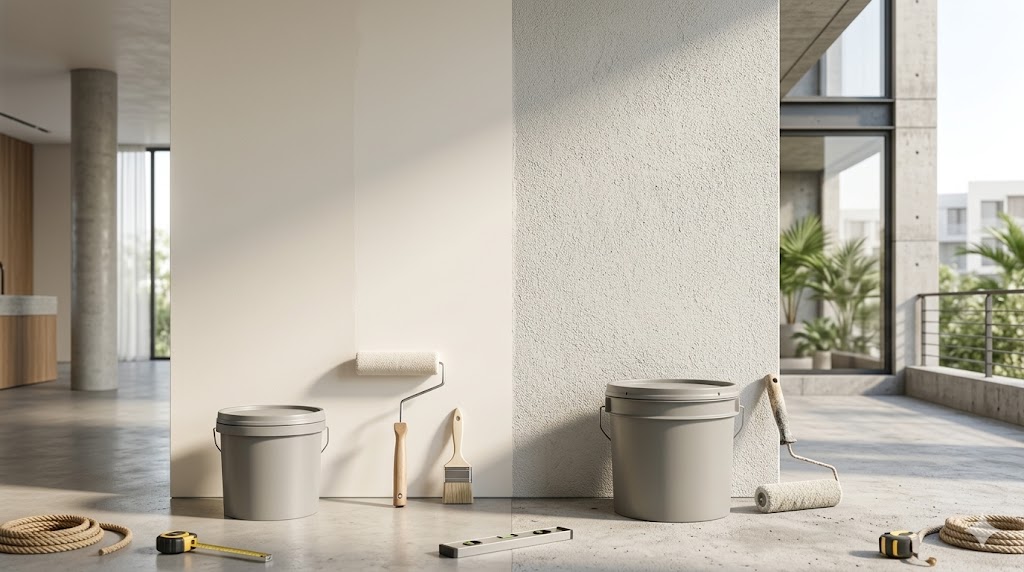
How to Choose the Right Primer for Interior and Exterior Walls
A beautiful paint finish does not start with paint. It starts with the right wall preparation.
Many people spend time selecting the perfect paint shade, texture, or finish, but they often ignore one important step: primer application. Primer acts as the base layer between the wall surface and the paint. It helps the paint stick better, look smoother, and last longer.
Without the right primer, even good quality paint can look patchy, peel early, or lose its finish over time.
But not every wall needs the same primer. Interior walls, exterior walls, new surfaces, old painted walls, damp walls, and repaired patches all need different types of surface preparation.
Let’s understand how to choose the right primer for interior and exterior walls in simple language.
No h3 tags found inside Content.
Why Primer Is Important Before Painting
Primer may not look as exciting as the final paint color, but it plays a very important role in the final finish.
A good primer helps:
Improve paint adhesion
Reduce patchiness
Seal porous surfaces
Increase paint coverage
Improve color uniformity
Reduce paint peeling
Make the paint finish smoother
Protect the wall surface
Improve the life of the paint system
Skipping primer may save time in the beginning, but it can lead to higher maintenance later.
Interior Primer vs Exterior Primer
Interior and exterior walls face different conditions.
Interior walls are usually protected from direct sunlight and rain, but they may face dust, stains, humidity, and regular cleaning.
Exterior walls face harsher conditions like sunlight, rain, wind, pollution, moisture, temperature changes, and dust.
Because of this, exterior primers are usually made to provide better resistance against weather and moisture, while interior primers are designed to improve smoothness, adhesion, and paint finish indoors.
Using the wrong primer can affect the durability of the paint.
How to Choose Primer for Interior Walls
Interior walls need a primer that gives a smooth and uniform base for paint. Since these walls are not directly exposed to rain and sunlight, the focus should be on surface sealing, finish quality, and paint adhesion.
1. Check Whether the Wall Is New or Old
For new plastered walls, the surface is usually porous and may absorb paint unevenly. A suitable interior wall primer helps seal the surface and reduce uneven absorption.
For old painted walls, the surface may have dust, chalking, stains, or repaired patches. In this case, the surface must be cleaned and prepared before primer application.
For new interior walls: Choose a primer suitable for fresh plaster, putty, or cement-based surfaces.
For old interior walls: Choose a primer that improves adhesion over previously painted or repaired surfaces.
2. Look at the Surface Condition
Before choosing primer, always check the wall condition.
If the wall is smooth, dry, and clean, a standard interior primer may be enough.
If the wall is chalky, powdery, or weak, it may need extra surface preparation before primer. Primer should not be applied directly on loose or dusty surfaces without cleaning.
If the wall has stains, moisture marks, or patches, those problems must be treated before painting.
Primer supports paint performance, but it cannot fix serious wall defects by itself.
3. Choose Primer Based on Paint Type
The primer should be compatible with the paint you plan to use. For most interior wall paints, a water-based primer is commonly used. It is easy to apply, dries faster, and works well on properly prepared interior surfaces.
If you are using premium emulsion paint, the primer should create a smooth and uniform base so the final paint looks rich and even.
Always check the product recommendation before selecting primer.
4. Use Primer After Putty Application
For a smooth interior paint finish, wall putty is often applied before painting. After putty dries and sanding is completed, primer should be applied before the final paint coat.
This helps bind the surface dust, improves paint adhesion, and gives better coverage.
A common interior painting sequence is:
Surface cleaning
Crack or defect repair
Putty application
Sanding
Primer application
Paint application
Following the right sequence is very important for a long-lasting finish.
5. Consider Stain Blocking Primer for Problem Areas
Some walls have stains from smoke, water marks, ink, oil, or old patches. If these stains are not treated properly, they may show through the paint later.
For such areas, a stain-blocking primer may be required. It helps cover stains and creates a better base for fresh paint.
However, if the stain is due to active seepage or dampness, the source of moisture must be fixed first.
How to Choose Primer for Exterior Walls
Exterior walls need stronger protection because they are exposed to weather. Rain, sunlight, dust, humidity, and temperature changes can damage paint if the base preparation is poor.
The right exterior primer helps the paint bond better and protects the wall surface.
1. Choose a Weather-Resistant Primer
Exterior walls need a primer that can handle outdoor conditions. A good exterior primer should support the paint system against moisture, sunlight, dust, and surface wear.
It should help improve adhesion and reduce water absorption from the wall surface.
For exterior walls, avoid using interior primer. Interior primer is not designed for outdoor exposure.
2. Check for Dampness and Seepage First
Before applying exterior primer, inspect the wall for dampness, cracks, leakage, or seepage. If there is moisture inside the wall, primer and paint may fail early.
You may see signs like:
Damp patches
Paint peeling
White salt marks
Cracks
Fungus or algae growth
Bubbling paint
These issues should be repaired before primer application.
Primer is not a waterproofing solution by itself. If there is water seepage, proper waterproofing or crack repair should be done first.
3. Use Primer Suitable for Cement Plaster and Masonry
Most exterior walls are made of cement plaster, concrete, or masonry surfaces. These surfaces can be porous and may absorb paint unevenly.
A good exterior primer seals the surface and improves paint coverage. It also helps create a stronger base for exterior paint.
For new exterior walls, allow the plaster to cure and dry properly before applying primer.
4. Select Primer Based on the Final Paint System
The primer and paint should work together as a system. If you are using exterior emulsion paint, choose a primer recommended for exterior emulsion application.
For textured finishes or protective coatings, a specific primer may be required depending on the product.
Using a mismatched primer can reduce paint performance.
5. Consider Anti-Algae or Anti-Fungal Properties
Exterior walls in humid areas or shaded locations can develop algae, fungus, or black patches. This is common during monsoon or in areas with poor sunlight.
In such cases, choose a primer and paint system that supports better resistance against fungal or algae growth.
Also make sure the wall is cleaned properly before application. Existing algae or fungus should be removed before primer and paint.
Primer for Different Wall Conditions
Different wall conditions need different primer choices. Here is a simple guide.
New Interior Walls
For new interior walls, use an interior wall primer suitable for plastered or putty-finished surfaces. The wall should be fully dry before application.
This helps reduce paint absorption and gives a smoother final finish.
New Exterior Walls
For new exterior walls, use an exterior wall primer designed for cement plaster or masonry surfaces. Make sure the plaster is properly cured and dry.
This helps improve paint adhesion and exterior durability.
Repainting Old Interior Walls
For old interior walls, remove loose paint, dust, grease, and weak surface layers. Apply primer only after the surface is clean and stable.
If there are repaired patches, primer helps create a more uniform base before repainting.
Repainting Old Exterior Walls
Old exterior walls need proper cleaning and repair before primer. Remove flaking paint, treat cracks, clean fungus or algae, and fix dampness issues.
Then apply a suitable exterior primer before paint.
Damp or Stained Walls
Do not apply regular primer directly on damp walls. First, find and fix the source of dampness.
For stains, use a suitable stain-blocking primer if needed. But if the stain is caused by active water leakage, waterproofing is more important than primer.
Putty-Finished Walls
After putty application and sanding, primer is important. It helps bind the surface and prepares it for paint.
Without primer, paint may get absorbed unevenly and look patchy.
Common Mistakes to Avoid While Choosing Primer
Choosing the right primer is important, but application mistakes can still ruin the result.
Avoid these common mistakes:
Using interior primer on exterior walls
Applying primer on damp surfaces
Skipping primer on new plaster
Applying primer without cleaning the wall
Painting before primer dries
Using primer as a solution for leakage
Ignoring cracks and surface defects
Not following the recommended dilution ratio
Applying very thin or very thick primer coats
Using poor quality tools
A good primer works best only when the surface is properly prepared.
How to Apply Primer Correctly
The primer application process should be simple but careful.
First, clean the wall properly. Remove dust, loose paint, oil, grease, algae, and weak material. Repair cracks and damaged patches. Make sure the wall is dry.
Then mix the primer as recommended by the manufacturer. Apply it evenly using a brush, roller, or spray depending on the surface and product type.
Allow the primer to dry fully before applying paint. Do not rush this step, especially in humid weather.
Proper drying helps the paint bond better and gives a cleaner finish.
Interior Primer or Exterior Primer: Which One Do You Need?
Choose interior primer when you are painting:
Bedrooms
Living rooms
Dining rooms
Office interiors
Ceilings
Dry internal walls
Putty-finished walls
Choose exterior primer when you are painting:
Outside walls
Building elevations
Boundary walls
Balconies
Parapet walls
Exposed cement plaster
Weather-facing surfaces
The simple rule is this: interior primer is for finish and adhesion inside the building. Exterior primer is for adhesion and weather support outside the building.
Final Thoughts
Primer is not just an optional layer. It is an important part of a long-lasting paint system.
For interior walls, the right primer helps create a smooth, uniform, and paint-ready surface. For exterior walls, the right primer helps improve adhesion and supports better protection against weather exposure.
Before choosing primer, always check the wall type, surface condition, moisture level, paint system, and application area.
A good paint finish is not only about the color you choose. It is about the base you create.
When the primer is right, the paint looks better, performs better, and lasts longer.

Products
Gypsum & Plasters
Wall Putty
Primers
Emulsion & Additives
Construction Chemicals
Tile Adhesive
Repair & Bond
Panels & Accessories
Resources
Blogs
Careers
Privacy Policy
Terms & Conditions
Sitemap
Contact
A: Sakarni Plaster (India) Pvt. Ltd,
Plot No. 29, NWA Road
Punjabi Bagh West
New Delhi – 110026
P: +91 9810177365
E: info@sakarni.com
Get a Quote
Become Dealer
Google Map
